The cultural history of Nepal's Terai region starts with the nomadic Tharu people. They came here over 800 years ago. There was a major reduction in mosquitos and malaria in the 1950's so other immigrants moved in to farm the fertile lowlands.
Farmers make their living mainly from mustard and rice crops. Over the previous 300 years there was great danger to them and their crops from wild animals. The hunting parties of the past were, therefore, welcomed. Even today, local people have to keep the animals at bay.
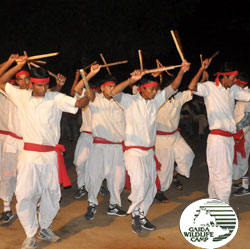
A common cultural display of the local Tharus is the Stick Dance. This dance, usually performed by young men, takes place in a circle. Sticks whirl and clash in a fantastic display of precision handling and timing. Some say the dance is part of a war culture. Others believe it reflects efforts frighten wild animals away.
 Conservation and tourism are helping the local population. They help people value the national park and the animals that live there. In January of each year, the government allows 10 days for locals to collect grass in the park. The grass is fodder for animals, thatch for roofs and building material for homes when mixed with earth and dung. Conservation and tourism are helping the local population. They help people value the national park and the animals that live there. In January of each year, the government allows 10 days for locals to collect grass in the park. The grass is fodder for animals, thatch for roofs and building material for homes when mixed with earth and dung.
Hindu, Buddhist and animist beliefs ensure many lively festivals and wedding celebrations. They also account for the many temples and shrines throughout the area. Ritual morning blessings are taken by staff at the Gaida temple.
Local people are hired as guides, naturalists and ornithologists. They are also the cooks and lodge maintenance crew in the camp. One family member only is employed so that employment is spread around. Education and health care are provided them and their family.
|